
.webp)
.webp)
.webp)
.webp)


Credit cards have evolved far beyond impulse purchases and travel bookings. In 2023, Canadians completed 21.7 billion payment transactions valued at $11.9 trillion, with credit transactions representing a full third of that volume. That staggering figure confirms what many cardholders already know: credit cards are now a mainstream bill-payment vehicle, not just a spending tool.
But here's what makes 2026 different. According to J.D. Power's research, average monthly credit card spend has fallen 17% over two years - from $1,618 in 2023 to $1,336 in 2025. Economic uncertainty hasn't pushed Canadians away from credit cards entirely. Instead, it has made them more strategic about every dollar they charge. Paying bills with a credit card in Canada is a core part of that strategy, turning fixed monthly expenses into points, miles, or cashback.
The numbers back this up. Roughly 74% of Canadian adults used credit cards for essential purchases in the past 12 months, and a growing share of those transactions involve recurring household bills. If you're just starting out with credit, our easy approval credit cards guide can help you find the right card. Meanwhile, digital payments now account for 86% of total payment volume in Canada, making the infrastructure for card-based bill payments stronger than ever.
This article delivers a complete breakdown of which Canadian bills accept credit cards, the real cost of processing fees, and how to stack rewards using platforms like Neobanc to come out ahead. For a broader overview of all digital payment methods, see our guide to pay bills online in Canada.
Not every bill in Canada accepts a credit card directly. Some billers welcome Visa or Mastercard payments through their own portals, while others require a third-party platform to bridge the gap. Understanding which category your bills fall into helps you plan your rewards strategy and avoid surprises at checkout.
Several categories of Canadian bills accept credit card payments without any intermediary. These are the easiest wins for cardholders because the payment process works just like any online purchase.
These direct-acceptance bills form the backbone of a card-based payment strategy. You earn full rewards with zero friction.
The most valuable bills - the big ones - often don't accept credit cards directly. That's where third-party payment platforms come in.
If you want to pay rent with Mastercard, these platforms are your best path. The key is choosing one that keeps fees low enough that your rewards still outweigh the cost.
A few payment categories remain stubbornly resistant to credit card acceptance.
Canadian Bill Payment by Credit Card - Acceptance Summary
| Bill Type | Direct Card Acceptance | Third-Party Option Available | Typical Fee Range |
|---|---|---|---|
| Utilities | Yes (most) | Yes | 0% – 1.5% |
| Rent/Mortgage | No | Yes | 1.5% – 3.5% |
| Property Tax | Varies by city | Yes | 1.0% – 2.5% |
| Insurance | Yes (most) | Yes | 0% – 2.0% |
| Telecom/Internet | Yes | Yes | 0% |
| Income Tax (CRA) | No | Yes | 1.5% – 2.5% |
| Tuition | Varies by school | Yes | 1.5% – 3.0% |
Here's where many Canadians hesitate. Processing fees eat into rewards, and sometimes they erase the benefit entirely. But the math isn't always as grim as it seems.
J.D. Power found that 53% of cardholders say merchants now charge a higher price when a credit card is used. In 88% of those instances, customers switch to an alternative payment method. That's a rational response when fees run 2% to 3% with no offsetting benefit.
Third-party bill payment platforms typically charge between 1% and 2.5%. Some charge a flat fee per transaction instead. The question isn't whether a fee exists - it's whether your rewards exceed it.
Consider a simple scenario. You pay $2,000 in rent each month. The platform charges a 1.5% processing fee - that's $30. Your credit card earns 2% cashback on all purchases - that's $40. You net $10 in profit every month just by routing your rent through a credit card.
Now add a platform like Neobanc that stacks up to 1% cashback on top of your card's native rewards. Suddenly that same $2,000 rent payment earns you $40 from your card plus $20 from the platform, totaling $60. Subtract the $30 fee, and you walk away with $30 in net rewards. Wondering if this math works for your situation? Our rewards vs. fees analysis breaks down every scenario.
Paying bills with a credit card only makes sense if you pay your statement balance in full each month. Carrying a revolving balance at 20% or higher interest wipes out any rewards benefit instantly. FICO reports that bank credit card payment-to-balance ratios have declined from 55% to roughly 52-53%, meaning more Canadians are carrying balances forward. If you fall into that category, focus on rebuilding your credit and paying down debt before adding bill payments to your card.
You should also avoid charging bills when:
Strategic bill payment isn't about using any credit card for any bill. It requires matching the right card to the right expense, choosing the right platform, and timing your payments to maximize your billing cycle.
Your card's base reward rate determines whether bill payment makes financial sense. Here's what to look for:
New to credit? Our first-time credit card guide helps you pick a starter card with decent rewards. If your credit history is thin or damaged, check out options for credit cards with bad credit.
Not all third-party platforms are equal. Some charge high fees and offer nothing beyond the payment routing. Others - like Neobanc - add cashback on top of your card's native rewards, effectively creating a double-dip opportunity. When evaluating platforms, compare:
That last point matters more than many people realize. If your rent payments get reported to Equifax or TransUnion, you're building credit history every single month. Learn how rent affects your credit score in our detailed guide.
Neobanc reports your rent payments to credit bureaus — turning a bill you're already paying into a stronger credit score.
Start Reporting RentCredit card billing cycles typically run 28 to 31 days. By timing your bill payments to land right after your statement closes, you get the maximum interest-free float - sometimes 50+ days before payment is due. This means you keep your money in a high-interest savings account longer while your bills sit on your card interest-free.
A practical example: if your credit card statement closes on the 15th, schedule your rent payment for the 16th. That charge won't appear on your statement until the following month, and you won't owe payment until roughly the 10th of the month after that.
The card you use determines whether bill payments actually pay you back. A handful of Canadian cards offer elevated cash back specifically on recurring bill payments — the category that covers utilities, telecom, insurance, and subscriptions. Here is how the strongest options compare for 2026.
Top Canadian Cards for Recurring Bill Payments (2026)
| Card | Cash Back on Recurring Bills | Annual Fee | Best For |
|---|---|---|---|
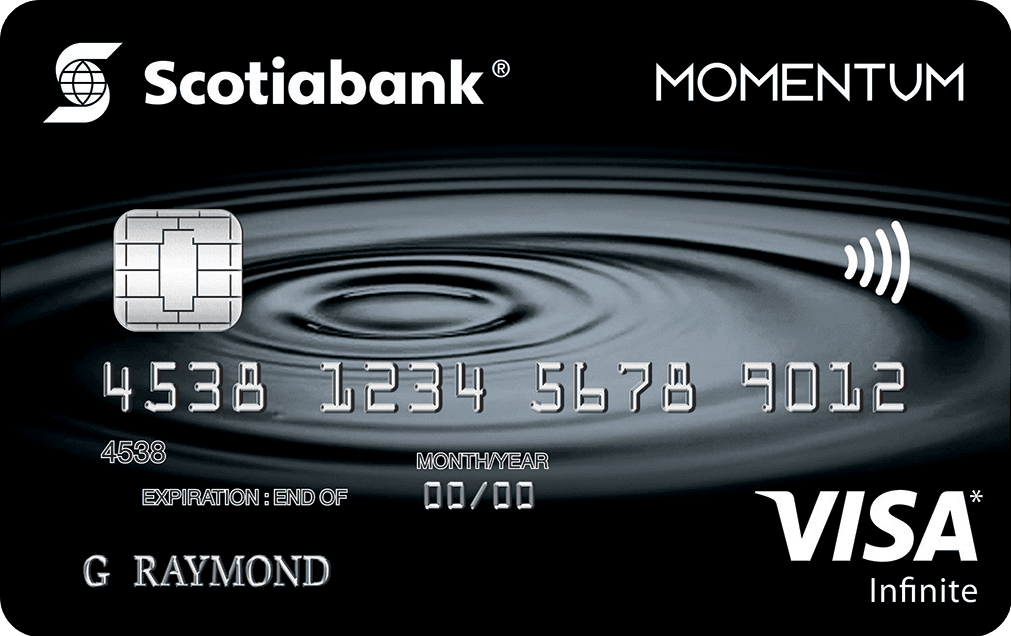 Scotia Momentum Visa Infinite Scotia Momentum Visa Infinite | 4% (also 4% on groceries) | $120 (first year rebated) | Highest bill-payment rate |
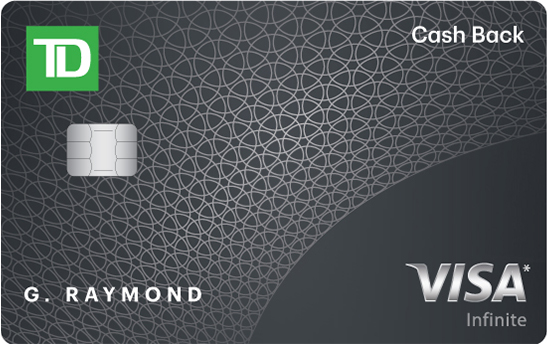 TD Cash Back Visa Infinite TD Cash Back Visa Infinite | 3% | $139 | No category earning caps |
 CIBC Dividend Visa Infinite CIBC Dividend Visa Infinite | 2% (4% on gas & groceries) | $120 (first year rebated) | Mixed everyday spending |
 Tangerine Money-Back Mastercard Tangerine Money-Back Mastercard | 2% (chosen category) | $0 | No-fee option |
Rates reflect each issuer's published recurring-bill / subscription category for 2026. Confirm current terms on the issuer's site, as categories and caps change.
Whichever card you choose, the real edge comes from stacking. When you pay those bills through Neobanc's bill payment platform, you earn your card's cash back plus an additional 1% from Neobanc on top — turning a 4% Scotia Momentum into an effective 5% on every bill, on money you were spending anyway.
Rewards aren't the only reason to pay bills with a credit card in Canada. Consistent, on-time credit card payments directly build your credit profile.
Every on-time credit card payment appears on your credit report. When you route $2,000 or more in monthly bills through your card and pay the full balance, you demonstrate:
This matters especially for newer Canadians. The Canadian Lenders Association reports that a third of all prime-and-below credit card originations now come from new-to-credit consumers - typically new immigrants or young Canadians. If that describes you, our guide to building credit lays out the full roadmap.
Standard credit card use already helps your score, but adding rent reporting creates a second layer of credit-building. When a platform reports your rent payments to credit bureaus, you get credit for both the card payment and the rent itself. Check our rent reporting guide for details on which services report to which bureaus.
For renters hoping to qualify for a mortgage down the road, this dual reporting strategy can accelerate your path to approval. Your credit score for renting and eventually buying depends on the depth and consistency of your payment history.
Understanding the broader credit environment helps you make smarter decisions about how you use your cards for bill payment.
The credit market is shifting. Data from FICO's industry benchmarks shows that monoline credit card delinquencies (2+ cycles) peaked at 6.8% in January 2025 - a five-year high. Bank card delinquencies remained more stable around 3%, but the trend signals increased financial stress among certain cardholder segments.
Canada's consumer credit market now stands at approximately $2.5 trillion, up 5% year over year. At the same time, mortgage payments have jumped nearly 10% year over year - hundreds of dollars more per household - driven by interest rate renewals and higher living costs. This squeeze on household budgets makes earning rewards on every possible bill payment even more valuable.
Lenders have been expanding credit limits significantly. FICO reports that bank card limits for new accounts grew from $5,647 to $6,344 over 24 months - a 12% increase - while monoline limits rose 20% from $4,068 to $4,884. Higher limits give you more room to route bills through your card without spiking your utilization ratio.
On the flip side, merchant surcharges are becoming more common. More than half of cardholders report encountering surcharges, and satisfaction drops 42 points when a surcharge hits. The lesson: pay bills with a credit card in Canada through platforms that absorb or minimize these surcharges rather than passing them through unpredictably.
Canadian Credit Card Market Trends (2023-2025)
| Metric | 2023 | 2024 | 2025 | Change |
|---|---|---|---|---|
| Avg Monthly Spend | $1,618 | $1,342 | $1,336 | -17.4% |
| Payment-to-Balance Ratio | 55% | 52.5% | 52.5% | -2.5 pts |
| Bank Card Credit Limit | $5,647 | $5,996 | $6,344 | +12.3% |
| Monoline 2+ Cycle Delinquency | 4.5% | 5.8% | 6.8% | +2.3 pts |
| Digital Payment Share | 86% | 87% | 88% | +2 pts |
Ready to put this into action? Follow this step-by-step checklist to start earning rewards on your Canadian bills without losing money to fees.
Yes, but not directly to most landlords. Third-party platforms accept your credit card payment, then send funds to your landlord via direct deposit or cheque. Read our analysis on whether paying rent with a card is worth it for full details.
Not if you pay your full statement balance on time every month. In fact, consistent on-time payments help build your score. Problems only arise if you carry a revolving balance or push your utilization above 30%. Check our credit builder tools for more strategies.
Fees range from 1% to 2.5% depending on the platform and the bill type. CRA tax payments through authorized processors typically run 1.5% to 2.5%. Rent payment platforms usually charge 1% to 2%.
Yes. Since the 2022 settlement with Visa and Mastercard, Canadian merchants can pass card processing costs to customers. Surcharges are capped at the merchant's actual acceptance cost, typically 1% to 2.4%.
Not directly. Canadian mortgage lenders do not accept credit card payments. Some third-party services have attempted to bridge this gap, but fees tend to make the math unfavorable for most cardholders.
Paying bills with a credit card in Canada isn't a loophole or a hack. It's a deliberate financial strategy that millions of Canadians already use. The key lies in matching high-reward cards to the right bills, choosing platforms that add value rather than just fees, and always paying your balance in full.
With Canadian mortgage costs up nearly 10%, household budgets tighter, and credit card acceptance expanding across more businesses, the opportunity to earn on your fixed expenses has never been larger. Start by auditing your bills this week, calculate your net rewards potential, and make the switch where the numbers work in your favor.
Neobanc gives Canadians up to 1% cashback on bills and 6% on rent — no extra effort, just smarter payments.
Sign Up FreeMost bills can be paid with a credit card either directly or through a third-party platform like Neobanc. Telecom, insurance, and streaming bills often accept cards directly. Rent, utilities, and even mortgage payments can be routed through Neobanc, which accepts Visa, Mastercard, and American Express. The few exceptions include certain government fees, though CRA tax payments can be made via authorized payment providers.
It depends on your total rewards. If your credit card earns 2% cashback and Neobanc adds up to 1% on bills, you earn 3% against a typical 2–2.5% processing fee — netting you a positive return. The key is to always pay your statement balance in full; otherwise, interest (often 20%+) wipes out any gains. Run the math for each bill type before committing.
Neobanc's cashback is independent of your credit card issuer's rewards program. When you pay a bill through Neobanc using your rewards card, you earn both your card's points or cashback and Neobanc's cashback (up to 9% on rent, 1% on bills, 0.5% on mortgages). The two layers stack, which is why Neobanc functions as a cashback amplifier.
Not if you manage utilization responsibly. Keep your credit utilization below 30% of your available limit and pay your full balance each month. In fact, routing bills through a credit card and paying on time strengthens your payment history, which accounts for 35% of your credit score. Neobanc's rent reporting feature adds an additional credit-building tradeline.
Flat-rate cashback cards (1.5–2% on all purchases) offer the simplest positive return when paired with Neobanc. Travel rewards cards with higher earn rates can deliver even more value at redemption. Avoid cards with low rewards and high annual fees unless the total rewards (card + Neobanc) comfortably exceed the combined cost of the annual fee and processing fees.
Absolutely. A third of all prime-and-below credit card originations in Canada are now new-to-credit consumers [5]. Newcomers can pair an easy-approval or secured credit card with Neobanc to simultaneously earn cashback on bills and build a Canadian credit history through rent reporting.
Set up autopay from your chequing account to your credit card so the full statement balance is cleared every month. Alternatively, make payments right after each bill is charged rather than waiting for the statement date. With 58% of Canadian credit card customers classified as financially unhealthy [2], disciplined repayment is non-negotiable for this strategy to work.



.png)
.svg)
.png)