
.webp)
.webp)
.webp)
.webp)


Canadian renters have discovered a powerful financial strategy: using credit cards to pay monthly rent. This approach transforms your largest recurring expense into an opportunity to earn substantial rewards and build credit by paying rent. With housing costs consuming significant portions of household budgets in major cities, maximizing returns on these unavoidable payments makes financial sense.
The numbers paint a clear picture of the challenge many renters face. According to TenantPay research, 80% of tenants and landlords face rent payment issues, especially in cities like Vancouver and Toronto. This reality drives renters to seek smarter payment solutions that work in their favor.
Paying rent with the right credit card can earn substantial cashback - Neobanc offers up to 9% cashback on rent payments, making it one of the most rewarding options available to Canadian tenants. However, most landlords don't accept credit cards directly. This gap creates the need for third-party payment platforms that bridge traditional landlord preferences with modern payment methods.
This guide covers the best credit cards for rent payments, explains how payment platforms work, and reveals strategies to maximize rewards while earning cashback on rent. Whether you're looking to accumulate travel points, earn cashback, or strengthen your credit score for renting, the right card and platform combination can transform your rent from a pure expense into a wealth-building tool.
Understanding the mechanics of credit card rent payments helps you make informed decisions about which cards and platforms to use. The process involves a few straightforward steps that connect your credit card rewards to your monthly housing payments.
Landlords typically don't accept credit cards directly because of the processing fees involved. Third-party platforms solve this problem by acting as intermediaries. You pay the platform with your credit card, and they send payment to your landlord via e-transfer or cheque. This creates a transaction that landlords recognize as a standard payment.
These rent payment platforms have processed billions in transactions. TenantPay is trusted by over 1M+ users every year with $1B+ payments processed annually, demonstrating the scale and reliability of these services.
Payment platforms charge processing fees, typically ranging from 2-3% of your rent amount. This means choosing high-reward cards becomes essential to offset costs and generate positive returns. The math works in your favor when your card's rewards exceed the platform's fees.
It's worth noting what you can and cannot pay with credit cards. According to Chexy, there are only two kinds of bills you cannot pay with a credit card: mortgages and loan payments. Everything else - including rent, utilities, and subscriptions - remains fair game for rewards optimization.
Beyond rewards, paying rent with a credit card offers credit-building advantages. Regular on-time payments demonstrate responsible credit usage, which can improve your credit score over time. Some platforms also offer rent reporting to credit bureaus, adding another layer of credit-building benefit to your monthly payments.
Selecting the right credit card determines whether your rent payments generate meaningful returns or barely break even after platform fees. The following cards stand out for their rewards on recurring bill payments, making them ideal choices for Canadian renters seeking to maximize their monthly housing expenses.
The Scotia Momentum Visa Infinite Card leads the pack for rent payments. According to Chexy's analysis, it offers 4% cash back on recurring bills up to $25,000 annually. The numbers work impressively in renters' favor:
This card works particularly well for renters who also pay utilities and subscriptions, as all these payments qualify for the 4% rate. The generous annual cap accommodates even high-rent situations in expensive markets like Toronto and Vancouver.

The TD Cash Back Visa Infinite Card provides another solid option for rent payments. Research from Chexy shows it offers 3% cash back on recurring bill payments, with an annual cap of $15,000.
For renters spending $1,600 monthly on rent and bills, this card generates approximately $13 in cashback per month, translating to $156 yearly after accounting for platform fees. While the returns fall below the Scotia card, the TD option may appeal to those who prefer TD's banking or seek specific cardholder benefits.

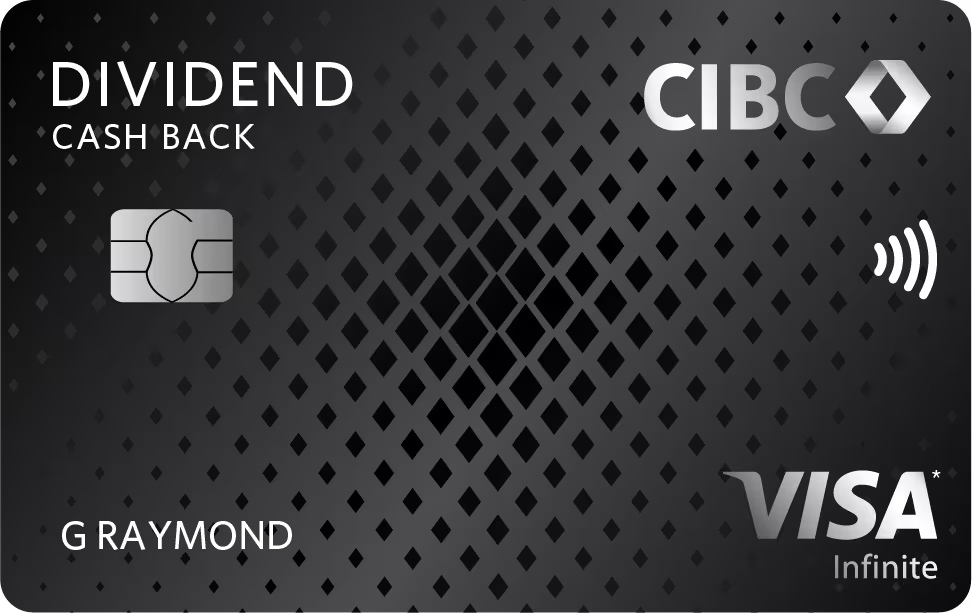
The CIBC Dividend Visa Infinite takes a different approach to rewards. Ratehub confirms it offers 4% cash back on groceries, EV charging, and gas, plus 2% back on recurring payments.
The 2% rate on recurring payments means rent payments earn $4 monthly or $48 annually after fees on typical spending. This card shines for renters who want to maximize grocery spending while still earning something on rent. The combined rewards across categories can make it worthwhile despite the lower rent-specific returns.
The Neo World Mastercard offers flexibility that appeals to many Canadian renters. According to NerdWallet Canada, it earns 2% cash back on groceries, gas, and recurring bill payments. The real advantage emerges when you link the card with a Neo Everyday account maintaining at least $10,000 balance - the rate doubles to 4%.
This tiered structure rewards those who centralize their finances with Neo, making it an attractive option for renters looking to build credit in Canada while earning on everyday spending.

Best Credit Cards for Rent Payments Comparison
| Card Name | Cashback Rate | Annual Cap | Monthly Earnings on $1600 | Net Annual After Fees |
|---|---|---|---|---|
| Scotia Momentum Visa Infinite | 4% | $25,000/year | $64 | $432 |
| TD Cash Back Visa Infinite | 3% | $15,000/year | $48 | $156 |
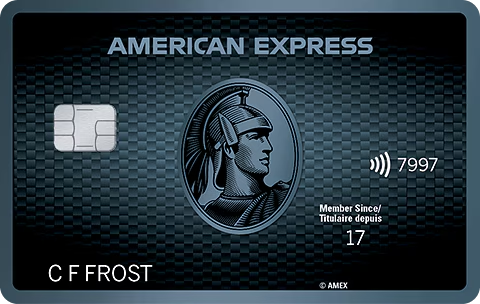 Amex Cobalt Card Amex Cobalt Card | 1x points | No cap | $16 | $192 |
| CIBC Dividend Visa Infinite | 1% | No cap | $16 | $72 |
When evaluating these cards, calculate your true annual value by subtracting both the card's annual fee and platform fees from your total rewards earned. A card with a $120 annual fee generating $432 in cashback still nets $312 - far superior to a no-fee card earning $156.
For renters with limited credit history, starting with a no credit check option and graduating to premium rewards cards creates a smart progression. Ratehub notes that most Canadians should wait at least 3 to 6 months between credit card applications, as each application triggers a hard inquiry that can temporarily lower credit scores.
For renters who prefer airline miles and hotel points over cashback, several travel cards transform monthly housing payments into future adventures. These cards particularly reward high spenders who can offset platform fees with valuable point redemptions.
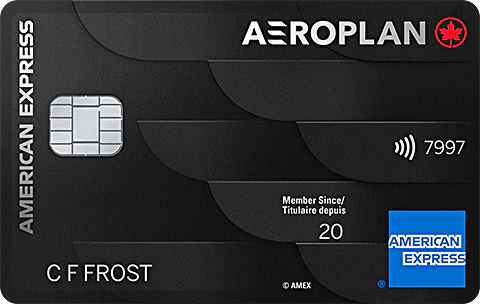
The American Express Aeroplan Reserve Card stands as the premium choice for travel-focused renters. Chexy's research reveals impressive earning potential:
With $1,600 monthly in rent and bills, cardholders earn 2,000 points monthly and 24,000 points yearly. This equates to approximately $168 in yearly net rent rewards after platform fees, assuming standard point valuations.
The American Express Cobalt Card earned recognition as the Best Overall Credit Card in Ratehub's 2026 Credit Card Awards. While its multipliers favor dining and groceries over rent payments, its versatile redemption options make it valuable for renters who want flexibility in how they use their rewards.
The card's monthly fee structure rather than annual fee appeals to those who want to try premium cards without long-term commitment. For renters exploring their first credit cards, the Cobalt provides an accessible entry point into premium rewards.
Travel cards require strategic thinking to extract maximum value from rent payments. Consider these approaches:
Renters focused on rent to own opportunities might prefer cashback cards that contribute to down payment savings, while those committed to long-term renting can benefit from accumulating travel points through their housing expenses.
Not every renter wants to pay annual fees, even for higher rewards. Several no-fee cards provide solid returns on rent payments without requiring annual financial commitments. These options work well for easy approval situations and renters building their credit foundations.
The BMO CashBack Mastercard delivers practical value without fees. NerdWallet Canada reports it provides:
The 1% rate on recurring bills means rent payments generate modest but fee-free returns. For renters paying $1,600 monthly, this translates to $16 in monthly cashback before platform fees. The grocery bonus adds value for renters managing tight budgets across all spending categories.

The no-fee Scotiabank American Express card earns up to 3x Scene+ points per $1 spent, roughly equivalent to 3% cash-back since Scene+ points are worth one cent apiece, according to NerdWallet Canada.
This card particularly suits entertainment enthusiasts who can redeem points at Cineplex locations. The combination of no annual fee and competitive rewards makes it attractive for renters who want simplicity without sacrificing returns.

Renters with limited or damaged credit histories can still participate in rewards-earning rent payments through secured cards. The Secured Neo Mastercard, as noted by Ratehub, requires a low $50 minimum security deposit and offers up to 1% back on gas and groceries.
While secured cards offer lower rewards, they serve a crucial purpose: establishing or rebuilding credit. Renters can use these cards strategically to improve their credit scores for future apartment applications while still earning some return on rent payments.
For those seeking guaranteed approval options, secured cards provide a reliable path forward. The credit building journey often starts with these foundational products before graduating to premium rewards cards.
Your choice of rent payment platform affects both your costs and your overall experience. Different platforms offer varying fee structures, landlord payment methods, and additional features that can enhance or diminish your rewards-earning strategy.
When evaluating platforms, consider these factors:
Some platforms offer rent reporting services that send your payment history to credit bureaus. This dual benefit - earning rewards while building credit - maximizes the value of every rent payment. Understanding how rent affects your credit score helps you make informed platform decisions.
Calculate your break-even point by dividing the platform's processing fee by your card's rewards rate. If a platform charges 2.5% and your card earns 4%, you net 1.5% on every rent payment - pure profit on an expense you'd pay regardless.
Neobanc's platform offers up to 9% cashback on rent payments, significantly exceeding typical platform fees and creating substantial positive returns for users. This elevated cashback rate makes rent payments genuinely profitable rather than merely rewards-neutral.
Late rent payments damage your relationship with landlords and potentially your tenancy. Choose platforms with proven track records and clear policies on payment timing. Reading reviews from other Canadian renters provides insight into real-world reliability.
Consider having a backup payment method ready in case of platform issues. The convenience of credit card payments shouldn't come at the cost of payment reliability when your housing depends on it.
Earning rewards on rent payments represents just one element of a comprehensive financial strategy. Combining the right card, platform, and spending habits amplifies your returns beyond simple rent payments.
Many Canadian renters overlook opportunities to stack rewards. Consider these strategies:
The combination of card rewards, platform bonuses, and credit building creates multiple value streams from a single monthly payment. Enter Neobanc contests for additional winning opportunities on top of your regular rewards.
Credit card statement cycles affect your credit utilization ratio, which impacts your credit score. Paying rent early in your billing cycle gives you time to pay down the balance before statement close, keeping utilization low while still earning rewards.
For renters working toward mortgage readiness, maintaining low credit utilization while demonstrating consistent payment history strengthens mortgage applications. The discipline of strategic rent payments prepares you for eventual homeownership decisions.
Credit card rent payments can backfire if managed poorly. Avoid these mistakes:
Foreign transaction fees typically add an extra 2% to 3% to all purchases made abroad, as NerdWallet Canada notes. While this doesn't affect domestic rent payments, international travelers should consider this factor when selecting their primary rewards card.
The best credit card to pay rent in Canada depends on your spending patterns, rewards preferences, and credit situation. The Scotia Momentum Visa Infinite emerges as the top choice for pure cashback on rent, while the American Express Aeroplan Reserve Card leads for travel rewards seekers. Budget-conscious renters can still earn with no-fee options like the BMO CashBack Mastercard.
Remember these key points when setting up your rent rewards strategy:
Canadian renters have a genuine opportunity to transform their largest monthly expense into a wealth-building tool. Whether you're saving for a down payment through cashback or accumulating points for dream vacations, the right credit card and platform combination puts your rent to work for your financial goals.
The Scotia Momentum Visa Infinite is the top choice for most renters because it earns 4% cashback on recurring bills up to $25,000 per year. On a $2,000 monthly rent, that is $960 in annual card cashback. When paired with a platform like Neobanc that stacks an additional 1-2% cashback, the combined gross return reaches up to 6%, or roughly 3.75% net after the 2.25% processing fee. For renters who also spend heavily on dining, the Amex Cobalt is a strong alternative.
Yes, but it requires stacking. A 4% recurring-bills card earns $80 monthly on $2,000 rent, and Neobanc's 2% rolling tier adds another $40, totaling 6% gross, or $120 a month. After the 2.25% platform fee of $45, your net cashback is roughly 3.75%, or $75 monthly. The 6% figure is the combined gross rate; the net is what actually lands in your account. No single card alone hits 6% on rent in Canada without a stacking platform.
Most rent payment platforms charge a processing fee between 2% and 3% for credit card payments, which works out to about $40 to $60 per month on $2,000 rent. Neobanc offers tiered fees: 1.50% for instant 1% cashback or 2.25% for the 2% rolling tier. The fee is only worthwhile if your card earns more than the fee costs, which is why a 4% recurring-bills card matters far more than a 1-2% everyday card.
Not if you manage it carefully. Charging $2,000 of rent monthly raises your credit utilization, which accounts for 30% of your score. Keep your balance under 30% of your credit limit and pay the statement in full each month. Done this way, paying rent on a card can actually help your score because payment history makes up 35% of your credit profile. Carrying a balance or maxing out your card, however, will hurt it.
Very rarely. Most Canadian landlords avoid credit cards because of processing fees and accounting complexity, preferring e-Transfer, cheque, or pre-authorized debit. To earn rewards on rent, renters use a third-party platform that charges their card and forwards the money to the landlord via Interac e-Transfer or pre-authorized debit. The landlord receives a normal payment and never knows a card was used, so you keep your rewards without any landlord involvement.
It depends on your card. With a 4% recurring-bills card paired with a stacking platform, you net roughly 3.75% after fees - about $900 a year on $2,000 monthly rent. With a 1% card, the 2.25% fee nearly erases your reward, leaving only about 0.75% net. It is worth it when your card earns well above the fee, and especially when a platform adds its own cashback on top. Always pay the balance in full to avoid interest.
For straight cashback, the Scotia Momentum Visa Infinite leads at 4% on recurring bills. For travel points, the Amex Cobalt earns 2x Membership Rewards on recurring payments plus flexible transfer options, and Aeroplan cards can earn meaningful points on rent volume. The best choice depends on whether you value cash or travel rewards. For most renters, a high-rate cashback card paired with a stacking platform delivers the clearest, highest net return on every rent payment.




.svg)

.png)